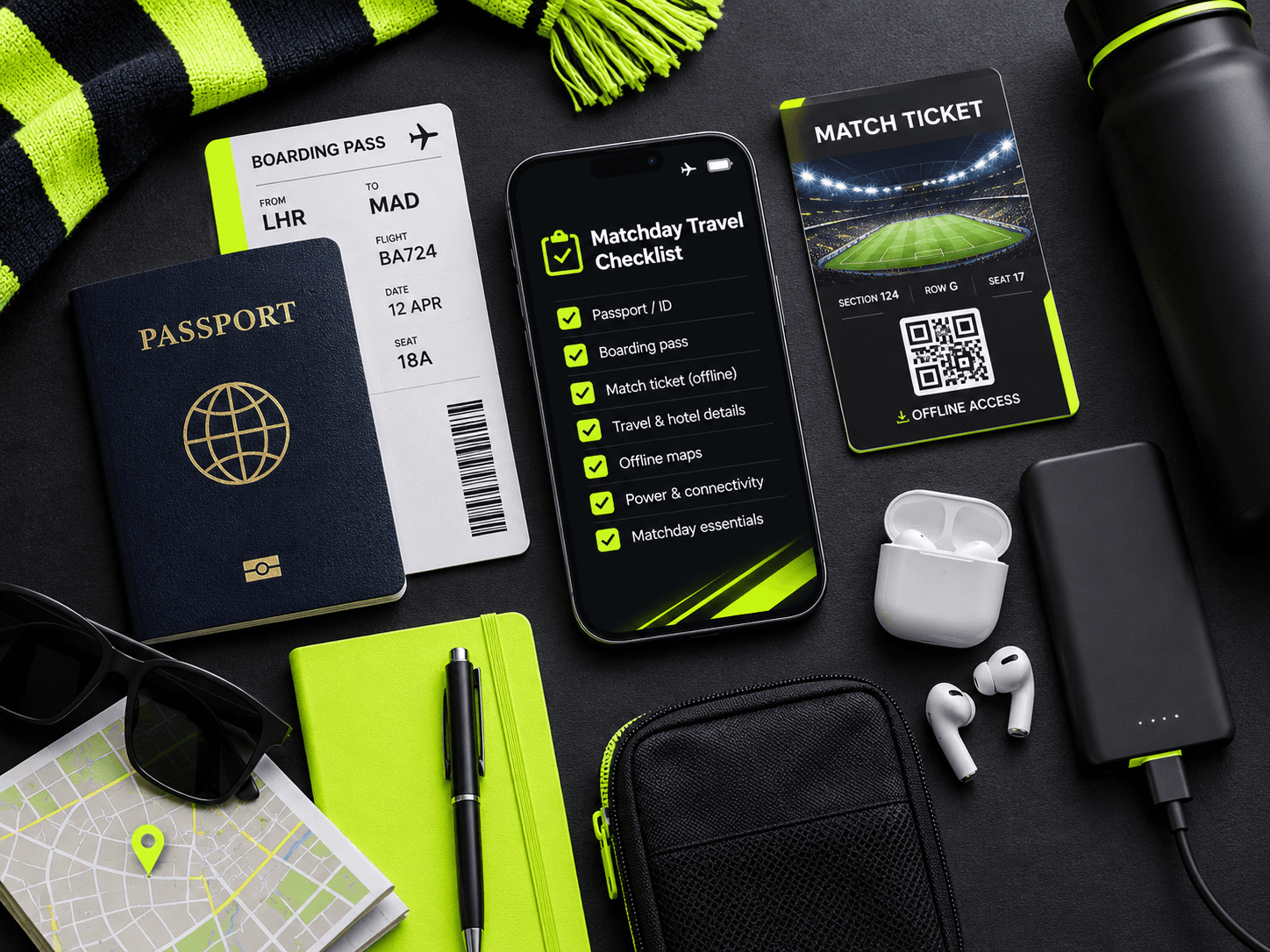
Data ready before kickoff, from the arrivals hall to the turnstile.
Your boarding pass, hotel confirmation, and match ticket are ready. Then you land in Madrid, Milan, London, or Munich and realize you need data before you can find the train platform, message your group, or access a mobile ticket. Choosing the best eSIM for football travel means solving that problem before kickoff.
For supporters traveling from the US to Europe, an eSIM is one of the simplest ways to stay connected without relying on expensive roaming or hunting for a local SIM card after a flight. But the cheapest plan is not automatically the right plan. A football weekend has its own demands: crowded stadium areas, maps running all day, last-minute fixture updates, digital ticket access, and plenty of photo and video sharing.
Here is what to look for before your next European match trip.
What Makes the Best eSIM for Football Travel?
The right eSIM should work where your trip actually takes you, not just in the country where the match is played. A supporter flying into London for Arsenal or Liverpool may add a few days in Paris or Amsterdam. A Champions League away trip can move between countries quickly. That makes regional Europe coverage more useful than a single-country plan for many travelers.
Start with coverage. Confirm that the plan includes every destination on your itinerary, including layovers if you expect to leave the airport. Also check whether it connects to reliable local networks and supports 4G or 5G where available. An eSIM provider may advertise Europe-wide service, but the countries, partner networks, and speed policies can differ by plan.
Data allowance matters just as much. Maps, rideshare apps, messaging, banking verification, translation, restaurant searches, and mobile ticketing all consume data. Add social media, matchday videos, video calls home, and streaming highlights, and a small plan can disappear faster than expected.
For a short city break built around one fixture, 5GB to 10GB may be enough if you use hotel Wi-Fi for heavier browsing. For a week-long trip, multiple cities, or a group that shares a hotspot, 10GB to 20GB is the safer range. Unlimited plans can be appealing, but read the details. Some reduce speeds after a daily allowance, which can be frustrating when you need a ticket QR code to load outside the stadium.
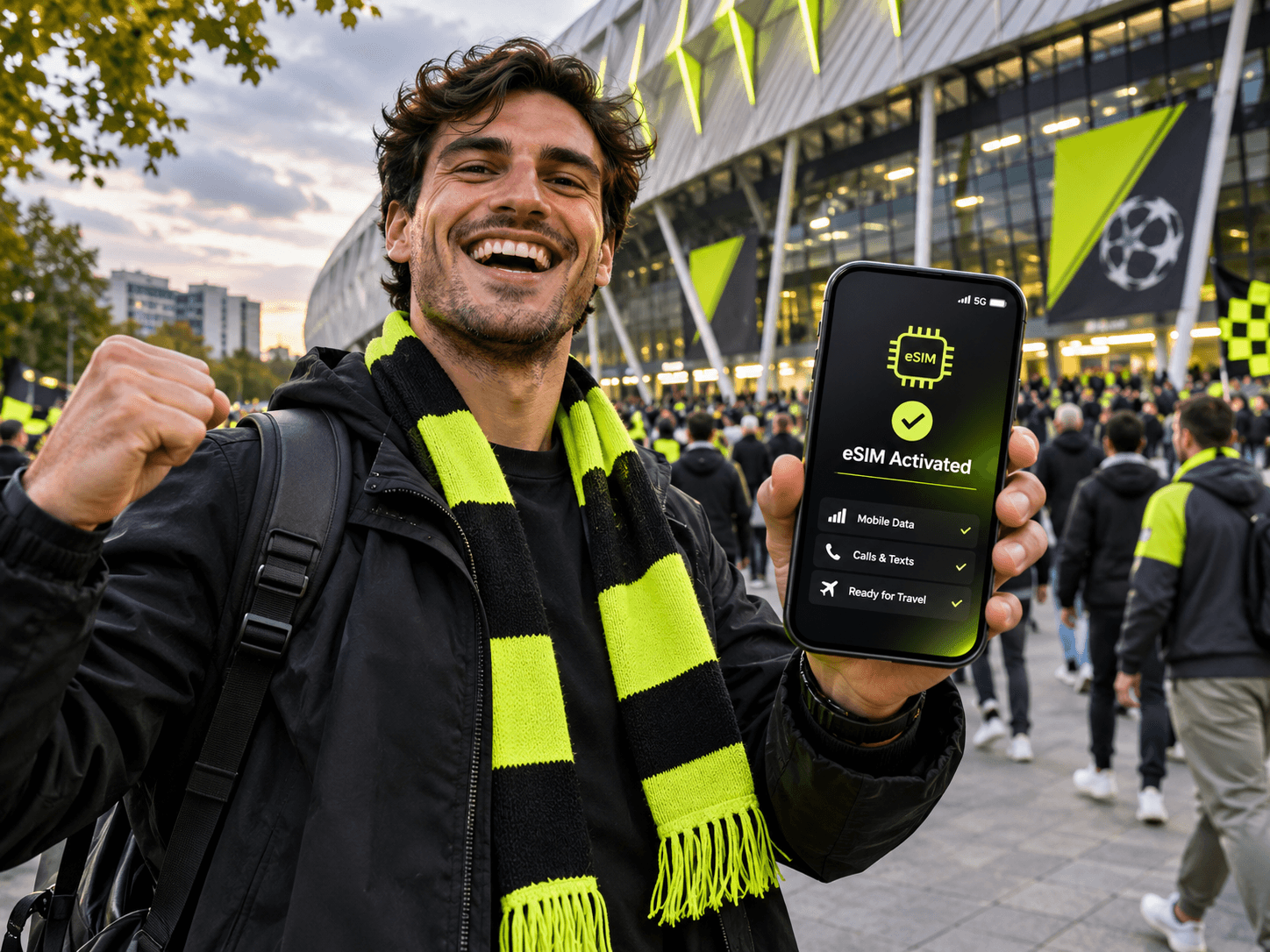
Stadium crowds test every connection
Even a strong local network can slow down near a packed ground. Tens of thousands of supporters may be uploading clips, coordinating meetups, and opening tickets at the same time. No eSIM can guarantee perfect service in every stadium bowl or concourse, but a plan with access to established local networks gives you a better starting point.
Do not wait until you are at the turnstile to open essential documents. Save tickets to your phone wallet where possible, take a secure offline screenshot if the ticket issuer permits it, and download your route to the stadium in advance. Your eSIM is a backup for matchday logistics, not a reason to leave everything until the final minute.
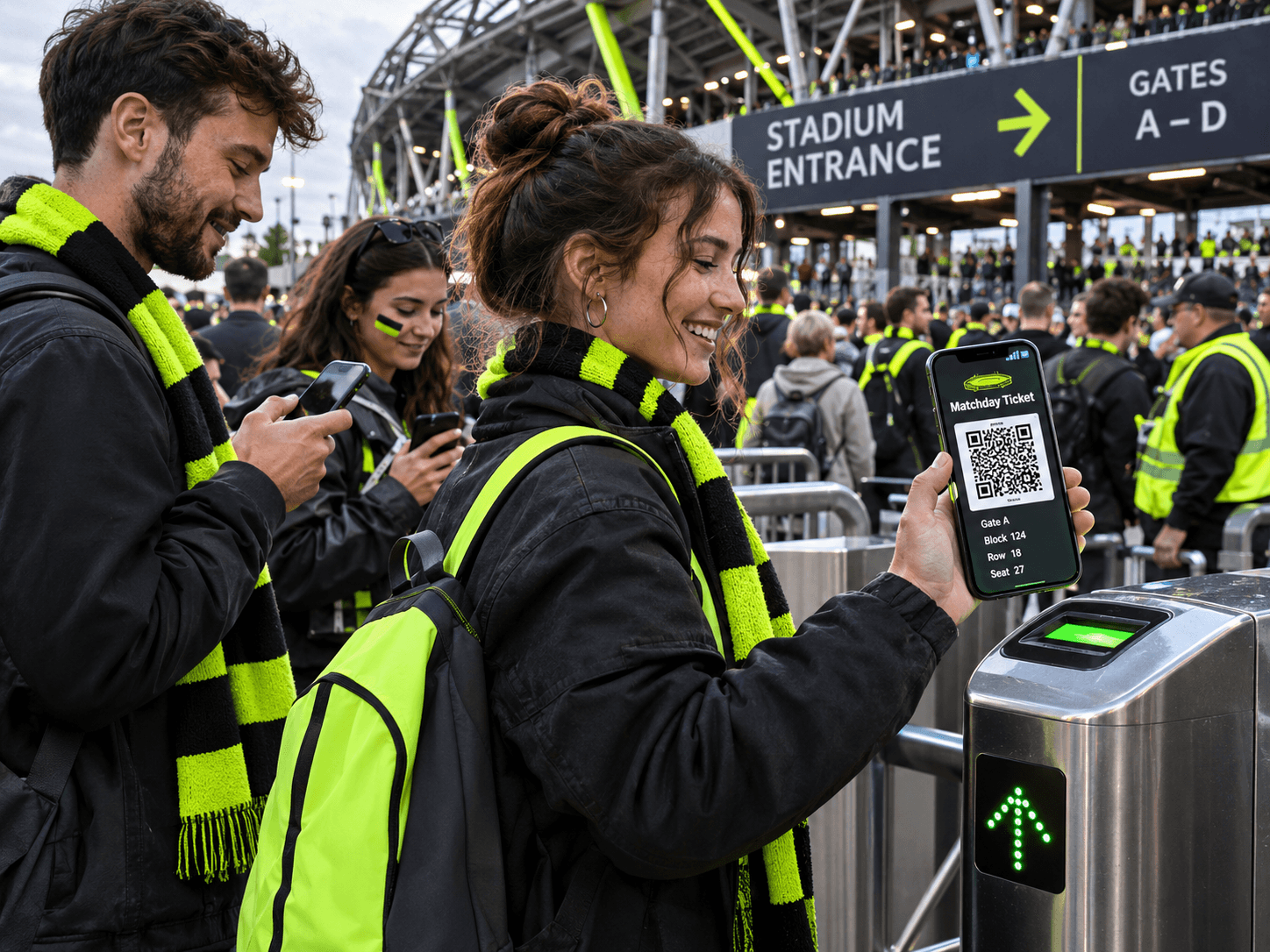
Choose Coverage for Your Football Itinerary
A single-country eSIM usually works best for a focused trip. If you are flying to Barcelona for a La Liga weekend, staying in the city, and flying home, a Spain plan may offer good value. The same applies to a quick Serie A trip to Rome or a Bundesliga fixture in Berlin.
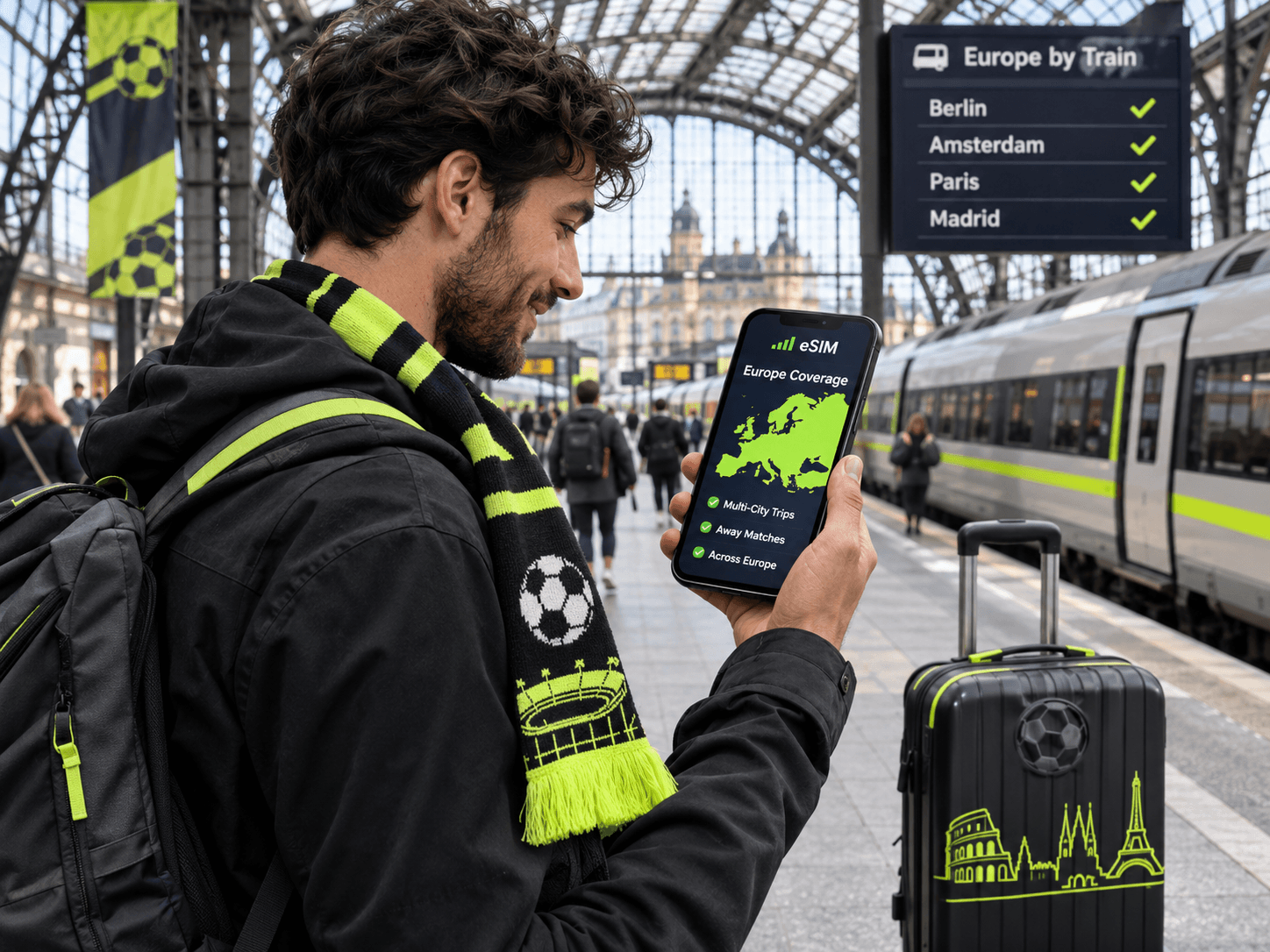
A regional plan is often the better call when football is only one part of the journey. Think of a fan starting in Manchester for a Premier League match, taking the train to London, then flying to Italy. Buying separate plans for each stop can cost more and create extra setup work. One Europe eSIM keeps the trip organized under a single data allowance.
Check the plan validity period, too. A seven-day plan that activates when you install it may expire before a long weekend is over. Others begin only when the eSIM first connects to a supported network. Installing ahead of time is usually smart, but understand exactly when the clock starts.
Keep your US number active when you need it
Most modern phones can use a physical SIM and an eSIM together, or multiple eSIMs. This lets travelers keep their US number available for calls, texts, or account verification while using the travel eSIM for mobile data.
Before departure, set the travel eSIM as your data line and turn off data roaming on your primary US line. This avoids surprise charges. If you receive two-factor authentication texts through your home number, confirm that your carrier allows it to receive texts abroad and understand any fees before you leave.
Features That Matter More Than Marketing
The best eSIM is not necessarily the plan with the biggest headline number. Look closely at how it fits your travel habits.
Hotspot support is valuable for couples, families, and friend groups. One person can connect a laptop, tablet, or another phone when needed, though sharing data can drain an allowance quickly. If you plan to work remotely between matches, use video calls, or upload large files, confirm whether tethering is allowed and whether it has separate limits.
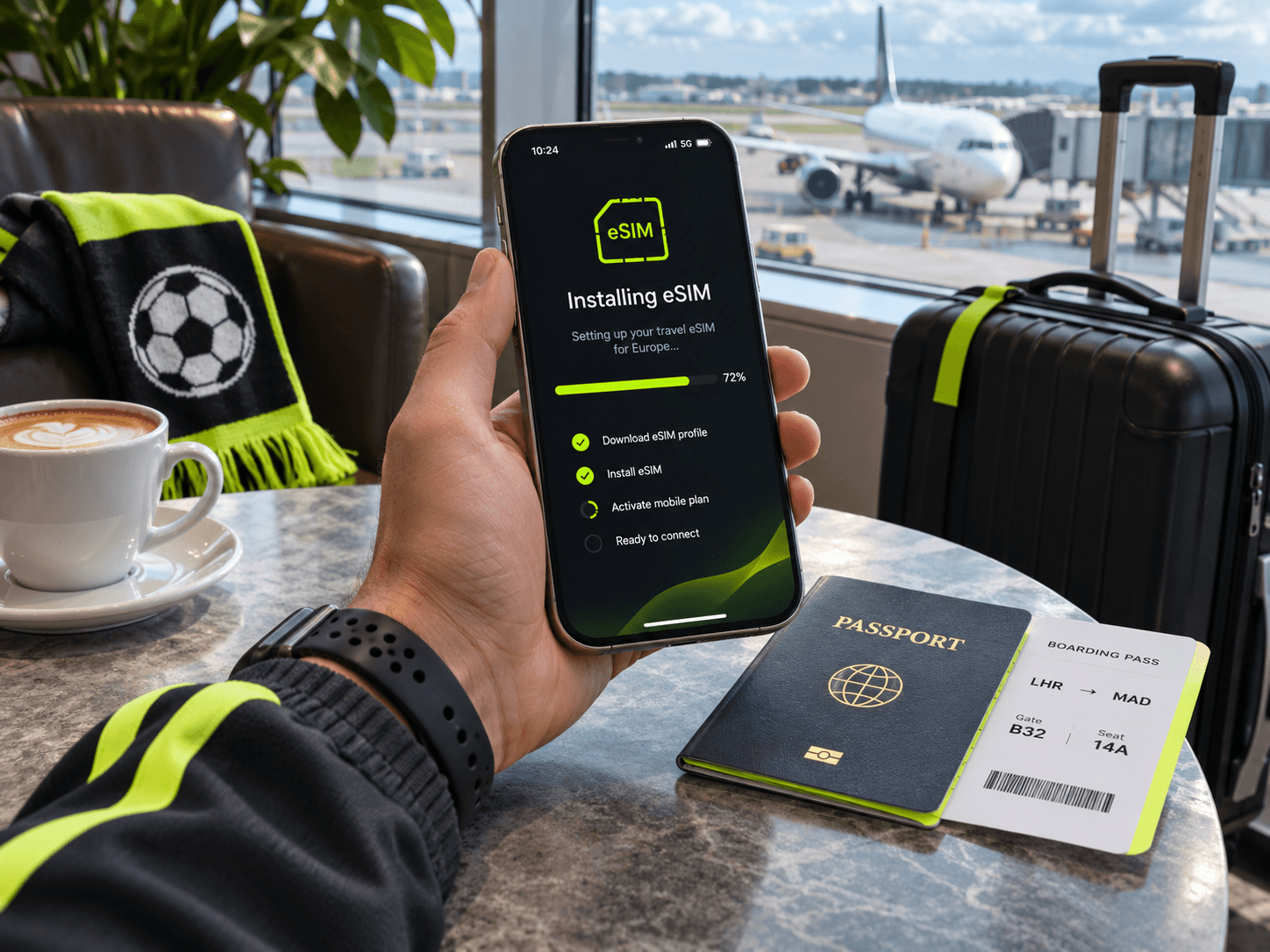
Installation should be straightforward. Most eSIMs arrive as a QR code or in-app activation. Your phone must be unlocked and eSIM-compatible, so check both before paying. It is also wise to install the eSIM while you still have dependable Wi-Fi at home or at your hotel, then activate the data line when you arrive.
Support is another practical differentiator. If activation fails at midnight before a matchday, a provider with clear setup instructions and responsive help is worth more than a small price saving. Keep the activation details available offline, along with your provider's support information.
Avoid treating a travel eSIM as a replacement for every service. Most data-only plans do not provide a local phone number for traditional calls or SMS. Messaging apps, internet calling, and email will work with data, but reservations or ticket platforms that demand a local number may not. Read the plan description rather than assuming.
How Much Data Does a Football Weekend Use?
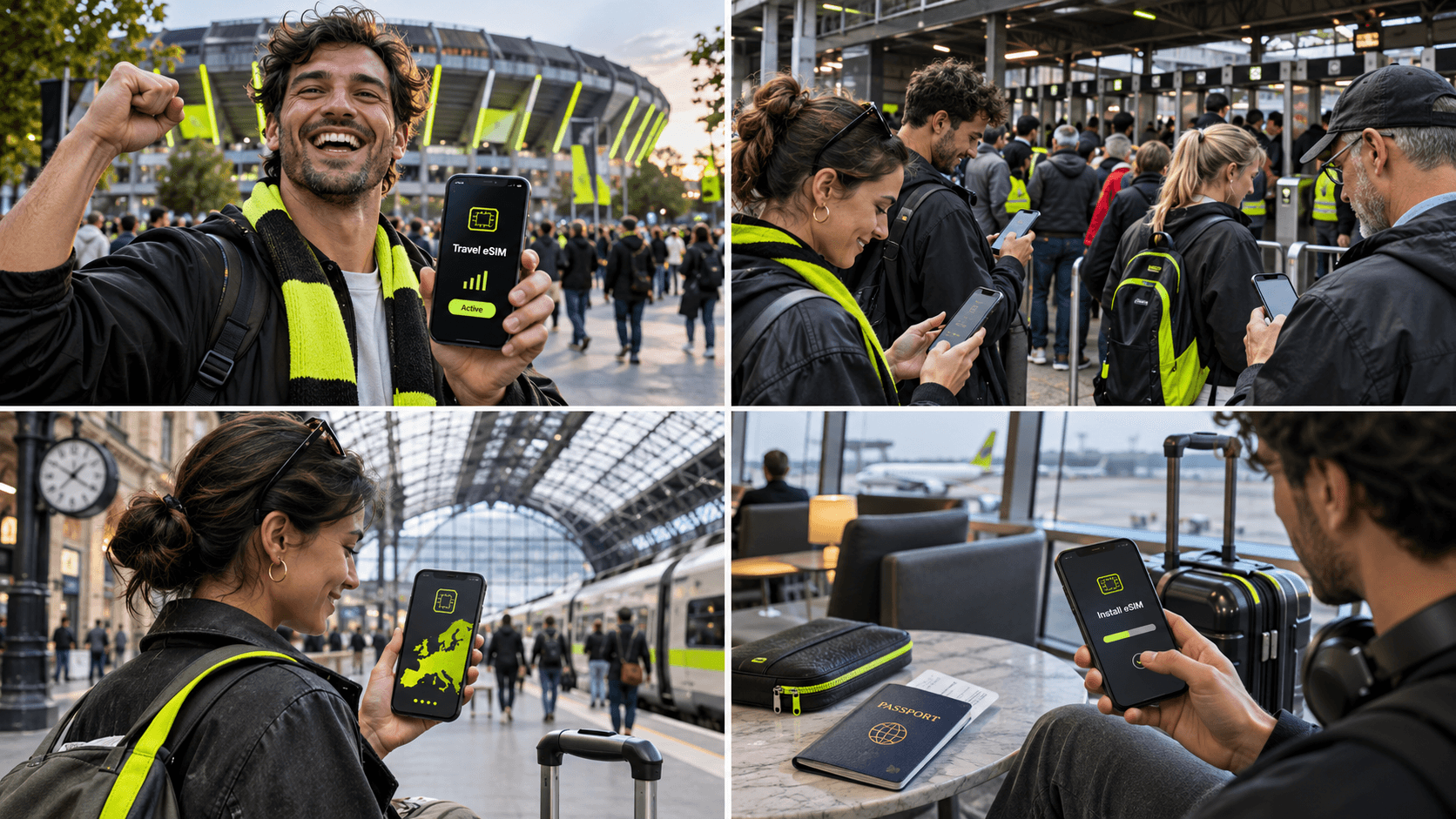
There is no single answer, but football travelers can estimate their needs realistically. Navigation and messaging use relatively little data. Social media is the bigger variable. Uploading a few photos after the match is modest; posting long videos, watching live streams, or scrolling video-heavy feeds for hours is not.
A disciplined traveler using Wi-Fi at the hotel can make 5GB work over a three- to four-day trip. A fan who posts regularly, uses rideshare apps, shares data with a travel companion, and watches clips on the move should consider 10GB or more. For two-week European football tours, frequent business use, or family travel with several connected devices, a larger regional plan is usually the sensible choice.
Download the essentials before leaving Wi-Fi: city maps, airline boarding passes, music, podcasts, and any stadium guide. Set photo backups and app updates to Wi-Fi only. These small adjustments preserve mobile data for the moments when it genuinely matters.
A Simple Matchday Setup Checklist
Before your flight, make sure your phone is unlocked, compatible with eSIM technology, and updated. Purchase a plan that covers the full itinerary, install it on Wi-Fi, and save the QR code or activation instructions somewhere secure.
Once you arrive, turn on the travel eSIM, select it for cellular data, and keep data roaming disabled on your US line. Test maps and messaging before heading to the stadium. Save your ticket to a mobile wallet when available, carry your stadium address in your notes, and download the route while you still have a stable connection.
When you book a match weekend with Golafly, connectivity can sit alongside your verified ticket, flight, and stay rather than becoming another separate travel task. That matters when the focus should be the confirmed seat, the atmosphere, and the final whistle.
The best plan is the one that covers your route, gives you enough data for your real matchday habits, and is ready before you reach the arrivals hall. Set it up early, keep your key documents available offline, and stay in the game from touchdown to kickoff.